
Roof Repairs in Blackpool: The Warning Signs You Should Never Ignore
A damaged roof does not always announce itself with a major leak. In many cases, the first signs are much smaller. A slipped tile, cracked flashing or damp patch can seem minor at first, but these problems can quickly become more serious if they are ignored.
At Blackpool Roofer, we carry out roof repairs across Blackpool and the surrounding Fylde Coast. We regularly deal with problems caused by age, weather exposure, failed materials and general wear. Spotting the early warning signs can help prevent more extensive damage and reduce the risk of costly repairs later.
Why Roof Repairs Should Not Be Delayed
Your roof protects your home from rain, wind and changing weather conditions throughout the year. Once part of the roof begins to fail, water can start finding its way into areas that should remain dry.
Even a small amount of water ingress can affect roof timbers, insulation, ceilings and internal decoration. Over time, persistent moisture can also lead to damp and mould.
Prompt roof repairs are often much simpler than dealing with the damage caused by leaving a problem unresolved.
Missing or Slipped Roof Tiles
One of the most obvious signs that your roof needs attention is a missing or slipped tile.
Roof tiles can move because of strong winds, ageing fixings or general deterioration. Once a tile has moved out of position, the roofing materials underneath may be exposed to rain.
This does not always result in an immediate leak. However, repeated exposure can eventually allow water to penetrate the roof.
If you notice a tile on the ground or can see an obvious gap in the roof covering, it is sensible to have the area inspected.
Cracked or Broken Tiles
Roof tiles do not need to fall off completely before they become a problem.
Cracks can allow water to pass through the surface of the tile and reach the layers beneath. Concrete, clay and slate roofing materials can all become damaged over time.
Small cracks may be difficult to see from ground level. For this reason, internal signs of moisture are sometimes the first indication that there is a problem.
Replacing individual damaged tiles can often prevent the issue from spreading.
Damp Patches on Ceilings or Walls
Damp marks inside your home should never be ignored.
A brown or discoloured patch on a ceiling can indicate that water is entering through the roof. However, the point where the water appears indoors may not be directly beneath the damaged area.
Water can travel along roof timbers, felt and other materials before becoming visible.
This is why professional inspection is important. Finding the actual source of the leak is essential before repairs are carried out.
Problems With Lead Flashing
Lead flashing is commonly used around chimneys, valleys, roof junctions and other vulnerable areas.
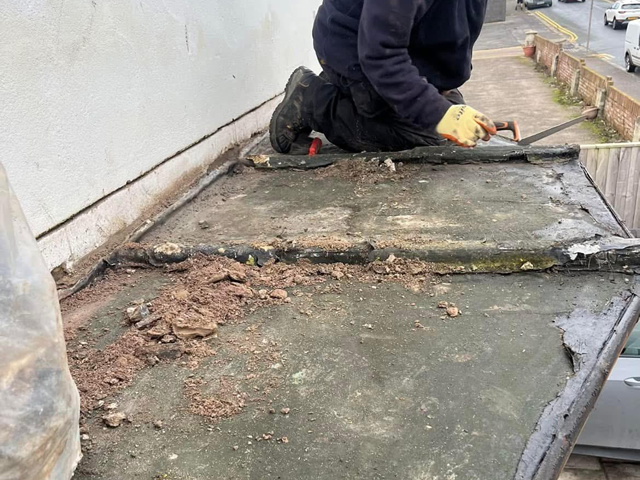
Its purpose is to prevent water from entering where different sections of the roof meet. If the flashing becomes loose, cracked or damaged, water can begin to penetrate these joints.
Older flashing can deteriorate over time, while strong weather can sometimes lift or distort sections.
At Blackpool Roofer, lead work forms an important part of many roof repair jobs because these areas are particularly important for maintaining a watertight roof.
Leaks Around Chimneys
Chimneys are another common source of roofing problems.
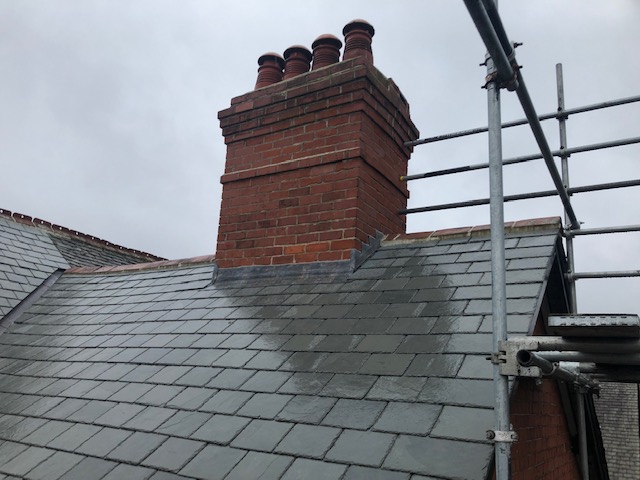
Water can enter around the base of a chimney if the flashing has failed. Deteriorated mortar, damaged chimney pots and worn pointing can also contribute to leaks.
Because chimneys project above the main roofline, they are exposed to significant amounts of wind and rain.
Regular inspection can help identify problems before they begin affecting the roof structure or internal areas of the property.
Water Entering Around Roof Windows
Roof windows such as Velux windows are designed to remain weather resistant when correctly installed.
However, problems can develop around the flashing system or surrounding roof covering.
Water marks around a roof window do not always mean the window itself has failed. The problem may come from nearby tiles, flashing or the way water is being directed around the opening.
A proper inspection can determine where the water is entering and what repair is required.
Damaged Roof Valleys
Roof valleys carry large amounts of rainwater away from the roof.
Because water is naturally directed towards these areas, valleys need to remain in good condition.
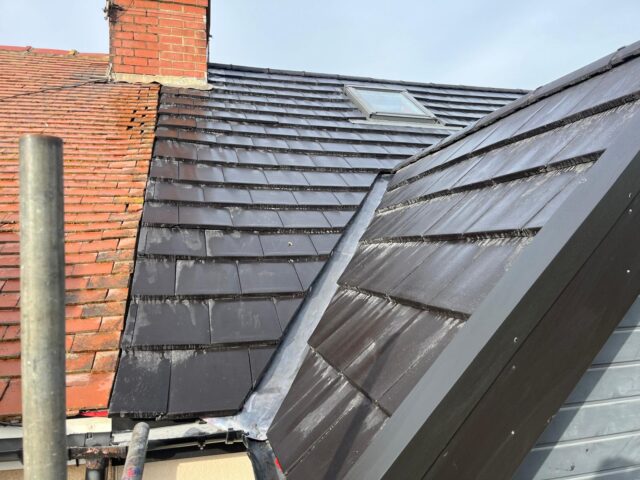
Damage to lead valleys or other valley systems can quickly result in water penetration. Debris can also collect in valleys and affect the way water drains away.
Cracks, movement or deterioration should be dealt with before they become a larger roofing problem.
Sagging Areas of Roof
A roof should generally maintain a consistent and even shape.
If you notice an area that appears to sag or dip, it may indicate a more significant structural issue.
Possible causes can include deteriorating roof timbers, long term water damage or movement within the roof structure.
Sagging should be inspected promptly because it may indicate more than a simple surface repair.
Damaged Fascias and Soffits
Fascias and soffits form part of the roofline and help protect the edges of your roof.
Older timber fascias can begin to rot after repeated exposure to moisture. Damaged soffits may also affect ventilation and allow unwanted moisture into the roof space.
Modern uPVC fascias and soffits provide a low maintenance alternative and can improve the appearance of the roofline while helping to protect the property.
Damage around the roof edge should therefore be treated as part of the overall condition of the roof.
Signs of Water in the Loft
Your loft can provide useful clues about the condition of your roof.
During wet weather, check for damp timbers, moisture marks, staining or signs of water running down internal surfaces.
A musty smell may also indicate persistent damp.
Early signs of water penetration are often easier to identify in the loft before they become visible on ceilings below.
Increased Damp or Mould Indoors
Roof problems can sometimes contribute to increased damp inside the home.
If moisture is entering through damaged roofing materials, it can create an environment where mould and condensation become more noticeable.
Not all damp problems are caused by the roof. However, roofing defects should be considered if the issue appears near ceilings, upper walls or loft spaces.
Storm Damage to Roofing
Properties in Blackpool and across the Fylde Coast can experience periods of strong wind and heavy rain.
Storm conditions can loosen tiles, damage flashing and expose existing weaknesses in older roofs.
After particularly severe weather, it is worth checking the property from ground level for obvious signs of damage.
Tiles on the ground, visible gaps, damaged ridge tiles or movement around the roofline may indicate that repairs are required.
Ridge Tile Problems
Ridge tiles sit along the highest points of pitched roofs.
Traditional ridge tiles are often secured using mortar, which can deteriorate as it ages.
Cracked mortar may allow ridge tiles to become loose. In strong winds, this can become a safety concern as well as a potential source of water ingress.
Modern repair methods can secure ridge tiles and restore the weather resistance of the roof.
When a Repair May Be Better Than a Re-Roof
Not every roofing problem requires a complete new roof.
If the overall roof covering is still in reasonable condition, targeted repairs may be enough to extend its useful life.
Individual tiles can be replaced, flashing repaired and smaller damaged sections restored without replacing the entire roof.
The important factor is identifying whether the problem is isolated or part of a wider pattern of deterioration.
When a Re-Roof May Need to Be Considered
There comes a point where repeated repairs may no longer represent the best solution.
If large areas of the roof are deteriorating, tiles are repeatedly slipping or significant structural problems are present, a full re-roof may be more practical.
A professional inspection can help determine whether repair or replacement offers the better long term solution.
At Blackpool Roofer, we carry out both roof repairs and complete re-roofing work, allowing us to assess each roof based on its actual condition.
Roof Repairs Across Blackpool and the Fylde Coast
We provide roofing services throughout Blackpool and nearby areas including Thornton Cleveleys, Poulton-le-Fylde, Fleetwood, Lytham and St Annes.
Our roof repair work covers a wide range of problems, from replacing individual tiles through to lead work, chimney repairs, roof windows, flat roofing and more extensive roof restoration.
Every roof is different, which is why identifying the cause of the problem is the first step towards carrying out the right repair.
Protecting Your Property With Timely Roof Repairs
Ignoring a roofing problem rarely makes it disappear.
Small defects can gradually allow more water into the roof structure, increasing the amount of work needed later.
Checking your roof periodically and responding quickly to visible warning signs can help protect your property and extend the life of your existing roof.
If you notice missing tiles, damp patches, damaged flashing or any other signs of deterioration, arranging an inspection can help identify the problem before it becomes more serious.
Blackpool Roofer provides professional roof repairs throughout Blackpool and the wider Fylde Coast, helping homeowners keep their roofs secure, weather resistant and in good condition.
Give us a call on 07884 364 861 for Roofing Work in Blackpool.